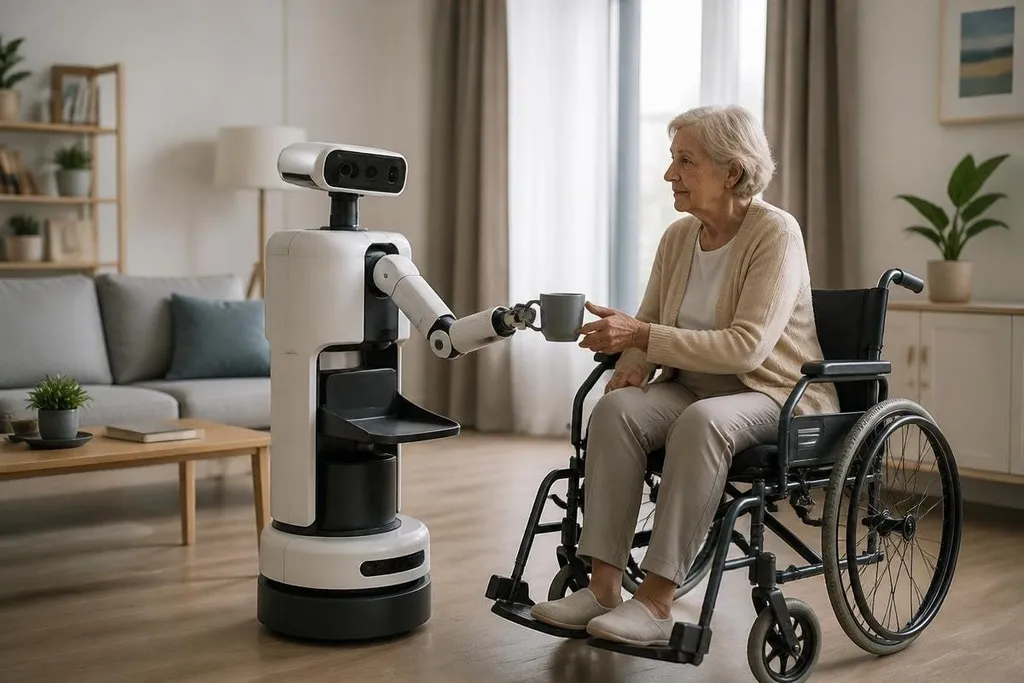
A caregiving robot has to work beside a person who may be weak, confused, or unable to recover from a mistake. That makes the useful breakthroughs easy to name: safer movement, better handling, reliable reminders, and clear control when a person needs help.
- Safe transfers between a bed, chair, and standing position
- Medication reminders that connect to a human care plan
- Remote help when the robot reaches a task it cannot finish
Safe movement around people
A care robot needs to move at walking speed around furniture, pets, wheelchairs, and people who change direction without warning. Cameras and LiDAR can map nearby objects, while force sensors can detect contact at the arm or hand.
The harder test is recovery. A robot may reach the right place and still fail when a person shifts weight, a blanket blocks a sensor, or a walker sits outside its planned route. A useful system should stop, explain the problem, and ask for help instead of pushing ahead.
That is why future trials should report more than successful demonstrations. They should record failed approaches, emergency stops, falls avoided, and the time needed for a human operator to take control.
Helping with transfers and daily tasks
Moving a person from a bed to a chair requires more than arm strength. The robot must sense body position, support changing loads, and keep pressure away from the neck, joints, and skin.
A practical design may use a lift sheet, a powered frame, or a small mobile arm. Each choice changes the safety problem. A lift sheet can spread load across the body, while an arm needs careful control of contact force and joint position.
The same test applies to daily tasks. Picking up a cup, opening a drawer, or placing food on a table sounds modest, but each task includes unknown objects and human timing. A robot that completes one fixed routine has not yet shown that it can handle a real care setting.
Medication and health reminders
Reminder systems may be easier to deploy than physical assistance, but they still need strict limits. A robot can announce a dose, check whether a compartment opened, or send a message to a named caregiver. It should not decide that a missed dose is safe to ignore.
The useful change here is the link between the robot and a human plan. That plan should state who gets an alert, what happens after a missed response, and when a nurse, family member, or emergency service takes over.
A care robot’s alert plan needs a record of what happened when a person missed a response. Care robot reports from Robot24.com can tie that result to the machine, test setting, and date before you judge the handoff. Privacy becomes the next concern when the robot carries a camera or microphone into a bedroom.
Privacy also needs a clear design. A camera in a bedroom can collect sensitive images even when the robot performs a harmless task. Systems should show when they record, limit who can view the data, and keep the robot useful when the network connection fails.
Remote control and human backup
No care robot will handle every situation on its own. Remote operation can fill the gap, but the delay between a request and a human response matters during a transfer or fall.
The system should show the operator the same scene the robot sees, identify the task that stopped, and let them return control safely. A remote worker also needs a clear limit on how many homes they can support at once. That number belongs in every pilot report.
I’d wait for results from homes and care sites before treating a polished demo as a breakthrough. A robot that works for six months with recorded failures and human interventions tells you more than a short video with perfect timing.
A buyer’s check before a pilot
Use these questions before spending money or changing a care routine:
- Name the task: Is the robot helping with transfers, food, reminders, monitoring, or another defined job?
- Set the handoff: Who takes control when the robot stops, and how long should that response take?
- Check the record: Does the supplier report failed tasks, emergency stops, and remote interventions?
- Test the room: Can it work with the actual bed, chair, floor surface, doors, and mobility aids?
- Protect private data: What does it record, where is the data stored, and who can view it?
- Price the service: Include installation, repairs, software fees, training, and human support.
The next meaningful result will come from a care site that reports routine use, not from a robot completing one task under controlled conditions. Until those records show safe transfers, clear human backup, and dependable privacy controls, the best caregiving robot is the one with the smallest promise and the strongest test plan.